Showing posts with label Mythology. Show all posts

Tuesday, November 18, 2008

Ra | Egyptian Sun God | King of the Gods

Depicted as a falcon crowned with a sun disk or a man with a falcon's head.

Ra was the God of the Sun. He sailed across the heavens in a boat called the 'Barque of Millions of Years'. At the end of each day Ra was thought to die and sailed on his night voyage through the Underworld, leaving the Moon to light the world above. The boat would sail through the twelve doors, representing the twelve hours of night-time. The next dawn, he was born again.

It was not always smooth sailing. During the day Ra had to fight his chief enemy, a snake called Apep. He was helped by the other gods, such as Seth and Bastet.

The sun disk on Ra's head often has a cobra round it. A cobra appears on the forehead of Pharaohs, like Tutankhamun.

Ra was the greatest of the gods and he kept his power in his secret name, which only he knew. He had started to grow old, and sometimes he dribbled. Isis collected some of his saliva and made it into a snake. She hid the snake where Ra would walk. When Ra trod on it, it bit him, and Ra screamed in pain. All the gods gathered round, but none could heal him. Isis said "If you tell me your secret name, this will give me enough magic power to heal you." Ra didn't want to do this, but eventually the pain was so bad that he had to. Isis healed him, and ever since then she has the magic powers that Ra had.

Source

Pygmalion

Pygmalion saw so much to blame in women that he came at last to abhor the sex, and resolved to live unmarried. He was a sculptor, and had made with wonderful skill a statue of ivory, so beautiful that no living woman could be compared to it in beauty. It was indeed the perfect semblance of a maiden that seemed to be alive, and only prevented from moving by modesty. His art was so perfect that it concealed itself, and its product looked like the workmanship of nature. Pygmalion admired his own work, and at last fell in love with the counterfeit creation. Oftentimes he laid his hand upon it, as if to assure himself whether it were living or not, and could not even then believe that it was only ivory. He caressed it, and gave it presents such as young girls love, bright shells and polished stones, little birds and flowers of various hues, beads and amber. He put raiment on its limbs, and jewels on its fingers, and a necklace about its neck. To the ears he hung earrings and strings of pearls upon the breast. Her dress became her, and she looked not less charming than when unattired. He laid her on a couch spread with cloths of Tyrian dye, and called her his wife, and put her head upon a pillow of the softest feathers, as if she could enjoy their softness.

The festival of Venus was at hand, a festival celebrated with great pomp at Cyprus. Victims were offered, the altars smoked, and the odor of incense filled the air. When Pygmalion had performed his part in the solemnities, he stood before the altar and timidly said, "Ye gods, who can do all things, give me, I pray you, for my wife" he dared not say "my ivory virgin," but said instead "one like my ivory virgin." Venus, who was present at the festival, heard him and knew the thought he would have uttered; and, as an omen of her favor, caused the flame on the altar to shoot up thrice in a fiery point into the air. When he returned home, he went to see his statue, and, leaning over the couch, gave a kiss to the mouth. It seemed to be warm. He pressed its lips again, he laid his hand upon the limbs; the ivory felt soft to his touch, and yielded to his fingers like the wax of Hymettus. While he stands astonished and glad, though doubting, and fears he may be mistaken, again and again with a lover's ardor he touches the object of his hopes. It was indeed alive! The veins when pressed yielded to the finger and then resumed their roundness. Then at last the votary of Venus found words to thank the goddess, and pressed his lips upon lips as real as his own. The virgin felt the kisses and blushed, and, opening her timid eyes to the light, fixed them at the same moment on her lover. Venus blessed the nuptials she had formed, and from this union Paphos was born, from whom the city, sacred to Venus, received its name.

Schiller, in his poem, the Ideals, applies this tale of Pygmalion to the love of nature in a youthful heart. In Schiller's version, as in William Morris's, the statue is of marble.

"As once with prayers in passion flowing,
Pygmalion embraced the stone,
Till from the frozen marble glowing,
The light of feeling o'er him shone,
So did I clasp with young devotion
Bright Nature to a poet's heart;
Till breath and warmth and vital motion
Seemed through the statue form to dart.

"And then in all my ardor sharing,
The silent form expression found;
Returned my kiss of youthful daring,
And understood my heart's quick sound.
Then lived for me the bright creation.
The silver rill with song was rife;
The trees, the roses shared sensation,
An echo of my boundless life."
Rev. A. G. Bulfinch (brother of the author).

Morris tells the story of Pygmalion and the Image in some of the most beautiful verses of the Earthly Paradise.

This is Galatea's description of her metamorphosis:

"'My sweet,' she said, 'as yet I am not wise,
Or stored with words aright the tale to tell,
But listen: when I opened first mine eyes
I stood within the niche thou knowest well,
And from my hand a heavy thing there fell
Carved like these flowers, nor could I see things clear,
But with a strange confused noise could hear.

"'At last mine eyes could see a woman fair,
But awful as this round white moon o'erhead,
So that I trembled when I saw her there,
For with my life was born some touch of dread,
And therewithal I heard her voice that said,
"Come down and learn to love and be alive,
For thee, a well-prized gift, today I give."'"


Source

Sunday, July 13, 2008

Merlin


A Latinized form of the Welsh name Myrddin. He was a magical figure who appears in literature ranging from medieval manuscripts to modern novels. References to him may also be found in a wide varity of place names and specific sites throughout Great Britain. He was a wizard frequently linked with King Arthur, although Guiley suggests he may have originated as a version of the Celtic god Mabon, the British Apollo. According to Geoffrey of Monmouth's life of Merlin, the great wizard, together with the bard Taliesin, took the wounded King Arthur to the Fortunate Isles.

One of the best known portrayals of Merlin is found in Sir Thomas Mallory's Le Morte d'Arthur, first published in 1485. In this story Merlin helps reaise the young Arthur and, on Arthur's accession to the throne on the death of Uther Pendragon, becomes the young king's magical advisor. Although more recent portrayals of Merlin show him as an old man, usually bearded, earlier representations depict him as a young, beardless man.

Medea

Medea was a priestess of Hecate and niece to Circe, in Greek mythology. She was the daughter of Aeëtes, king of Colchis and was famed for her magical arts. Medea fell in love with Jason and, with magic, helped him acquire the Golden Fleece from her father. However when Jason betrayed her, she caused the death of their two children and also the death of Jason's second wife. Medea married king Aegeus and by him had a son, Medus.

Medea later married Achilles, in the Elysian fields, and was honored as a goddess at Corinth, although the chief seat of her cult was Thessaly, the home of magic. She was made immortal by Hera and became known as "the Wise One."

Thoth

In Graeco-Roman times, the Egyptian Moon God Djehuti, or Zehuti, took the form Thoth (pronounced "Toe-th"). He was associated with Hermes. In Egypt, Thoth was patron of literature, science, wisdom, and inventions. He was also the spokesman for the gods and Keeper of the Records.

Thoth is depicted with the head of an ibis and, many times, wearing a solar disk sitting on a crescent on his head. Thoth also was occasionally depicted as a dog-headed ape, suggesting that he may have been derived from a fusion of two earlier lunar deities. He is usually counted as the oldest son of Ra but sometimes as the child of Geb and Nut.

Thoth had all knowledge and wisdom. He invented mathematics, astronomy, magic, medicine, music, and all the arts and sciences. He was also the inventor of hieroglyphs and, as such, became known as "Lord of Holy Words." As Moon God, it was his job to measure time.

A tarot deck designed by Aleister Crowley, with the art executed by Frieda Hariss, is known as the Crowley Thoth Tarot.

Wednesday, February 13, 2008

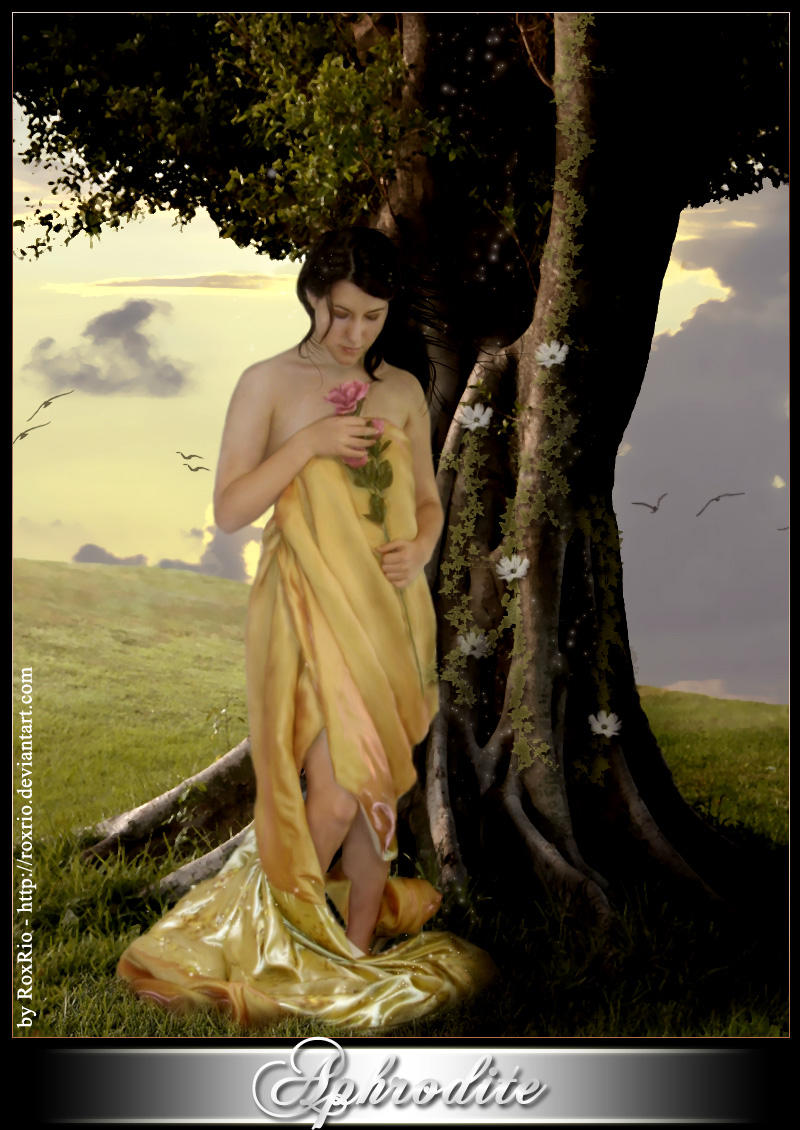
Aphrodite

Aphrodite was a Greek goddess of love, beauty and sexual rapture. Her Roman equivalent is Venus. She is directly related to the ancient fertility goddesses and mother goddesses, such as Hathor, Isis, and Astarte. In fact some authorities suggest Aphrodite was Phoenician and was the sister of the Assyro-Babylonian Ishtar and the Syro-Phoenician Astarte. According to some mythological accounts, she was born from the churning and foaming of the sea when Kronos threw Ouranos’s severed genitals into the water (the Greek aphros means “sea foam”), but this story arose later. In it, Aphrodite arose from the roiling sea and was borne by the waves to Cyprus. At the Cyprian city of Paphos, a temple was erected to her.

In origin, Aphrodite was obviously a fertility goddess. Her domain covered all of nature, animal and plant. She grew to be viewed in many aspects: as Aphrodite Urania, the goddess of pure love; Aphrodite Genetrix, or Nymphia, goddess of marriage (she was prayed to by unmarried women and widows); Aphrodite Pandemos (common) and Aphrodite Porn (courtesan) as the goddess of lust and venal love, and patroness of prostitutes. She was also Aphrodite the Warrior, represented helmeted and carrying arms. She was so worshiped at Sparta.

Aphrodite was married to Hephaestus, the god of fire, metalwork and craftsmanship, but was loved by many others, gods and humans. It is said that she roused the passionate desires of all the immortals and all came under her influence, with the exception of Athene, Artemis and Hestia. Her cult, in one form or another, was found throughout the Mediterranean lands. Festivals in her honor, known as Aphrodisia, were common.

Many witches use the name of Aphrodite as the goddess they worship, while others include her in their listings of honored deities. Of the many symbols sacred to her were the dove, sparrow, goose, and swan, the goat, the lynx, and the dolphin. Sacred plants included the rose, myrtle, quince, clover and watermint. Friday is sacred to her and her special festivals are on April 1 and 23, June 23 and July 19. She is associated with the zodiacal signs Taurus and Libra, and connected with the throat, kidneys and lumbar region.

Monday, February 11, 2008

Flagellation

Devotees of the goddess Isis, priests of Cybele, followers of Dionysus, the ancient Greek cult of the Spartans, and other religious followers of many different persuasions have recognized flagellation, or ritual scourging, as a necessary part of religious rites. In its broadest sense it is a spiritual cleansing.

The life-size frescos on the walls of the Initiation Room at the Villa of the Mysteries, just outside Pompeii, Italy, in clued a scene showing a priestess of Dionysus scourging and initiate. In the Wiccan initiation there is a similar ritual scourging as part of the palingenesis, which is the central theme of all initiations. It is a symbolic death prior to rebirth. Since it is symbolic, it is not designed to hurt the neophyte. The Wiccan scourge, in fact, is a whip made with thongs of silk or a similarly soft material. They are not knotted or in any way enhanced to produce pain.

Flagellation, or scourging, is also used by some witches to raise power when working magic. There are many ways of raising this cone of power—dancing, changing, singing, or sex, for example—and ritual scourging is one of them. Here again, the design is not to bring pain. The recipient (in some traditions this would be the priestess of the coven) is repeatedly scourged, but the thongs of the instrument are drawn across the body repeatedly in an almost hypnotic movement. The Book of Shadows, the coven’s ritual text, states that “the Scourge is used to bring blood to the surface of the skin, not to hurt.”

Yet the witchcraft practiced in the Middle Ages included a scourging that was designed to hurt. In the records of the 1662 trial of the Scottish Auldearne witches, Issobel Gowdie spoke of the leader of the coven beating them: “He would beat and buffet us very sore. We would be beaten if we were absent any time, or neglect anything that would be appointed to be done…He would be beating and scourging us all up and down with cords and other sharp scourges.” Of the Northumberland witches (1673), it was reported, “All of them who had done harm gave an account thereof to their protector, who made most of them that did most harm and beat those who had done no harm.”

Tuesday, February 05, 2008

Lycanthropy

Lycanthropy is the transformation of a human being in to the form of a wolf. The term is derived from the Greek words lukos, meaning wolf, and anthropos, meaning man. Such a human, transformed, is known as a werewolf. This term derives from the Anglo-Saxon wer, meaning man, and wulf, meaning wolf. There are countless folk tales of werewolves coming from every country in the world where there is or was a presence of wolves. In other countries that have not known the wolf, there are folk tales of such things as weretigers, werebears, werefoxes, wereleoopards and werepanthers.

Some people believed that the only transformation that occurred was purely in the mind of the person. In other words, no physical changes took place. The affected individual merely believed that the changes had occurred. Yet there were numerous well-documented cases —including several in France in 1598—that appeared to show otherwise.

Throughout the time of the witchcraft trials at the end of the 16th century, there were several of cases of lycanthropy. Geiler von Kayserberg’s book on witchcraft, Di Emeis (Strasbourg, 1517), includes an illustration of a man being attacked by a werewolf. The Révérend Père M. Mar. Guaccius’s Compendium maleficarum (Milan, 1626) has an engraving of a witch transformed into a wolf. A variety of German works of the 16th and 17th centuries also show these types of pictures. In many of the witch trials in Britain, evidence was offered of witches transforming themselves into a variety of animals, including rabbits, cats, dogs, crows and wolves. In 1573, Gilles Garnier of Dole, France admitted to becoming a werewolf and killing a ten-year-old girl, ripping her body to pieces with his claws and teeth. In 1589, Peter Stumpf of Bedburg, near Cologne, under torture confessed that he changed into such an beast with the aid of magic belt that was given to him by the devil. He could change back into human form, he said, by taking off the belt. Among others, Stumpf killed his own son and twelve other children, plus two young women and various livestock. He and his daughter were sentenced to be horribly tortured then burnt alive at the stake..

The Roman poet, Vergil, in his Eclogues (c. 20 BCE), wrote, “Often have I seen Moeris turn into a wolf and hide in these woods: often too have I seen him summon the spirits from the depths of the tomb and transfer crops elsewhere.” Pliny the Elder (23-79 CE) spoke of someone of the clan of Anthius, who was chosen by vote of the family and led away to a particular pool in the region of Arcadia. There he hung his clothes on an oak tree, swam across the pool, and went into the woods on the far side to transform into a wolf. He remained in that form for nine years before swimming back across the pool and changing back into a man. According to William Stokes (Religion of the Celts, 1873), St. Patrick cursed a certain race in Ireland so that every seven years they and their descendants would become werewolves.


Technorati tags: ,

Saturday, February 02, 2008

Artemis (Diana)

Daughter of Zeus and Leto and twin sister of Apollo, Artemis was one of the twelve great gods and goddesses of Olympus. She was a Greek goddess mainly associated with wildlife and with human birth. She was originally one of the great Mother Goddesses, with emphasis on her role as virgin huntress and patroness of chastity. As Apollo's twin sister, she is regarded as a divinity of the light, specifically the light of the "mon", and such has been an influential archetype for witches. Her symbol is the female bear and she is associated with the constellation Ursa Major.

Legend has it that she was born on the sixth day of the month of Thargelion, a day before her brother. As she grew up in her favorite Arcadia, she would hunt accompanied by sixty young Oceanids and twenty-nymphs. Armed with bow and arrows given to her by Zeus, she gained the epithet Apollousa, "the destructress," and was a deity of sudden death. She was especially venerated in Arcadia but was also worshiped throughout Greece, Crete, and Asia Minor.

Her Roman equivalent is Diana, described as "the eternal feminist." She is the source of magical power for witches, who gather to adore her at the full of the moon. The Canon Episcopi of the tenth century condemned those who "believe and profess themselves, in the hours of the night to ride upon certain beasts with Diana, the goddess of the pagans." She is a slim, beautiful virgin, usually depicted with her hair drawn back and wearing a short tunic--a Dorian chiton. She is frequently accompanied by either a young hind or a dog. As goddess of fertility , she is sometimes depicted with many breasts.

Artemis made chastity a strict law, although she did fall in love with Orion, whom she later shot in the head when tricked into doing so by Apollo. She had a dark and vindictive character and many were punished by death or torment when they crossed her or forgot to pay her reverence. Yet she could also be gentle and loving. She was also a music goddess and lover of singing and dancing.

Most Wiccans honor Artemis/Diana as part of the triple goddess aspect of the moon, and as a nurturer and protector. She has inspired the Dianic, strongly feminist, tradition of Wicca.


Technorati tags: , , , , , greek mythology, , , ,

Friday, February 01, 2008

The Story of Lilith

In Jewish folklore, Lilith is a female demon that is in some ways similar to a vampire. She was derived from a Babylonian-Assyrian demon named Lilit, or Lilu. It was believed that she had a particular power for evil over children. In the Rabbinical literature, Lilith became the first wife of Adam, but being his equal, objected to lying under him during intercourse. When he tried to force himself on her, she flew away.

The “Maid of Desolation” (ardat lili) of Babylonian tradition was a demon of waste places that originally inhabited in the garden of the Sumerian Inanna. In Assyrian belief, she was a wind spirit, with wild hair and wings. In the Talmud, Lilith is a succubus – an evil spirit of the night whose young, from her fornication with men, became demons. Molesting men while they slept, she was an angel of darkness, becoming a goddess of conception. This belief strengthened in the Middle Ages. It was said that children in their first week of life were most susceptible to Lilith, although some said a girl was in danger for twenty days and a boy for the first eight years of his life.

A talisman of protection against Lilith had to have three names engraved on it: Sanvi, Sansanvi, Semangelaf. These three names could also be written on the door to a child’s room. In medieval Jewish tradition, Lilith was the one who caused men to have nocturnal emissions. Her offsprong were the lilin, or lilim, and were said to have human bodies but with winges and the hindquarters of a donkey, although a terracotta relief from Sumer depicts Lilith herself as a human but with wings and the taloned feet of a bird. Lilith also appears in the folklore of Britain, Greece, Germany, Mexico, and even in Native American legends.

Some Witches consider Lilith a patroness. A Moon goddess, her beauty is more than human. Leland identifies her with Herodias, or Aradia , and quotes ancient Slavonian charms where she is mentioned.

Sources:
Leach, Maria (ed.): Funk & Wagnalls Standard Dictionary of Folklore, Mythology and Legend. 1984
Leland, Charles Godfrey: Etruscan-Roman Remains. 1892


Technorati tags: ,

Kali of Hindu Mythology


Literally “the Black One,” in Hindu myth, Kali is the destructive aspect of Parvati, consort to Shiva. She is usually depicted draped with several human heads and trampling on the body of her slain husband. She is simply one of aspect of the ultimate goddess, Devi.

She is often called Kali Ma, “the Black Mother,” and in addition to being a necessary destroyer, she is also a powerful creative force. Many of her rituals are orgiastic in nature. According to Patricia Monaghan,* Kali first manifested herself when the demon Daruka threatened the gods. The great goddess Parvati frowned at Daruka, knitting her brows in fury. From her sprang Kali, armed with a trident. She chased off the demon and made the heavens safe again. Myths tell of Kali dancing with Shiva, her dancing becoming wilder and wilder. She pauses, but should she continue, she could shake the world to pieces with her wildness. Despite the seeming negativity of this goddess, she is one of the most popular in India and is adopted by some Witchcraft covens.


*Monaghan, Patricia: The Book of Goddesses and Heroines.


Technorati tags: , ,

Wednesday, May 16, 2007

Eve and Lilith

I would like to apologize for the long delay between posts. I moved back to Tennessee and I had to get settled in. Posts will now resume normally. Thank you for being patient readers.

Lilith
John Collier
1887
(The Atkinson Art Gallery, Southport, England)


In an effort to explain inconsistencies in the Old Testament, there developed in Jewish literature a complex interpretive system called the midrash which attempts to reconcile biblical contradictions and bring new meaning to the scriptural text.

Employing both a philological method and often an ingenious imagination, midrashic writings, which reached their height in the 2nd century CE, influenced later Christian interpretations of the Bible. Inconsistencies in the story of Genesis, especially the two separate accounts of creation, received particular attention. Later, beginning in the 13th century CE, such questions were also taken up in Jewish mystical literature known as the Kabbalah.

According to midrashic literature, Adam's first wife was not Eve but a woman named Lilith, who was created in the first Genesis account. Only when Lilith rebelled and abandoned Adam did God create Eve, in the second account, as a replacement. In an important 13th century Kabbalah text, the Sefer ha-Zohar ("The Book of Splendour") written by the Spaniard Moses de Leon (c. 1240-1305), it is explained that:

    At the same time Jehovah created Adam, he created a woman, Lilith, who like Adam was taken from the earth. She was given to Adam as his wife. But there was a dispute between them about a matter that when it came before the judges had to be discussed behind closed doors. She spoke the unspeakable name of Jehovah and vanished.

In the Alpha Betha of Ben Sira (Alphabetum Siracidis, or Sepher Ben Sira), an anonymous collection of midrashic proverbs probably compiled in the 11th century C.E., it is explained more explicitly that the conflict arose because Adam, as a way of asserting his authority over Lilith, insisted that she lie beneath him during sexual intercourse (23 A-B). Lilith, however, considering herself to be Adam's equal, refused, and after pronouncing the Ineffable Name (i.e. the magic name of God) flew off into the air.

Adam, distraught and no doubt also angered by her insolent behaviour, wanted her back. On Adam's request, God sent three angels, named Senoy, Sansenoy, and Semangelof, who found her in the Red Sea. Despite the threat from the three angels that if she didn't return to Adam one hundred of her sons would die every day, she refused, claiming that she was created expressly to harm newborn infants. However, she did swear that she would not harm any infant wearing an amulet with the images and/or names of the three angels on it.

At this point, the legend of Lilith as the "first Eve" merges with the earlier legend of Sumero-Babylonian origin, dating from around 3,500 BCE, of Lilith as a winged female demon who kills infants and endangers women in childbirth. In this role, she was one of several mazakim or "harmful spirits" known from incantation formulas preserved in Assyrian, Hebrew, and Canaanite inscriptions intended to protect against them. As a female demon, she is closely related to Lamashtu whose evilness included killing children, drinking the blood of men, and eating their flesh. Lamashtu also caused pregnant women to miscarry, disturbed sleep and brought nightmares.

In turn, Lamshtu is like another demonized female called Lamia, a Libyan serpent goddess, whose name is probably a Greek variant of Lamashtu. Like Lamashtu, Lamia also killed children. In the guise of a beautiful woman, she also seduced young men. In the Latin Vulgate Bible, Lamia is given as the translation of the Hebrew Lilith (and in other translations it is given as "screech owl" and "night monster").

It needs to be remembered that these demonic "women" are essentially personifications of unseen forces invented to account for otherwise inexplicable events and phenomena which occur in the real world. Lilith, Lamashtu, Lamia and other female demons like them are all associated with the death of children and especially with the death of newborn infants.

It may be easily imagined that they were held accountable for such things as Sudden Infant Death Syndrome (SIDS, also called crib death, or cot death) where an apparently healthy infant dies for no obvious reason. Cot death occurs almost always during sleep at night and is the most common cause of death of infants. Its cause still remains unknown.

By inventing evil spirits like Lilith, Lamashtu, and Lamia, parents were not only able to identify the enemy but also to know what they had to guard against. Amulets with the names of the three angels were intended to protect against the power of Lilith.

Lilith also personified licentiousness and lust. In the Christian Middle Ages she, or her female offspring, the lilim, became identified with succubae (the female counterparts of incubi) who would copulate with men in their sleep, causing them to have nocturnal emissions or "wet dreams."

Again, Lilith and her kind serve as a way of accounting for an otherwise inexplicable phenomenon among men. Today, 85 percent of all men experience "wet dreams" (the ejaculation of sperm while asleep) at some time in their lives, mostly during their teens and twenties and as often as once a month. In the Middle Ages, celibate monks would attempt to guard against these nocturnal visits by the lilith/succubus by sleeping with their hands crossed over their genitals and holding a crucifix.

Through the literature of the Kabbalah, Lilith became fixed in Jewish demonology where her primary role is that of strangler of children and a seducer of men. The Kabbalah further enhanced her demonic character by making her the partner of Samael (i.e. Satan) and queen of the realm of the forces of evil.

In this guise, she appears as the antagonistic negative counterpart of the Shekhinah ("Divine Presence"), the mother of the House of Israel. The Zohar repeatedly contrasts Lilith the unholy whorish woman with the Shekhinah as the holy, noble, and capable woman. In much the same way, Eve the disobedient, lustful sinner is contrasted with the obedient and holy Virgin Mary in Christian literature.

Through her couplings with the devil (or with Adam, as his succubus), Lilith gave birth to one hundred demonic children a day (the one hundred children threatened with death by the three angels). In this way, Lilith was held responsible for populating the world with evil.

If you ask how Lilith herself, the first wife of Adam, became evil, the answer lies in her insubordination to her husband Adam. It is her independence from Adam, her position beyond the control of a male, that makes her "evil."

She is disobedient and like Eve, and indeed all women who are willful, she is perceived as posing a constant threat to the divinely ordered state of affairs defined by men.

Lilith is represented as a powerfully sexual woman against whom men and babies felt they had few defenses and, except for a few amulets, little protection. Much more so than Eve, Lilith is the personification female sexuality.

Her legend serves to demonstrate how, when unchecked, female sexuality is disruptive and destructive. Lilith highlights how women, beginning with Eve, use their sexuality to seduce men. She provides thereby a necessary sexual dimension, which is otherwise lacking, to the Genesis story which, when read in literal terms, portrays Eve not as some wicked femme fatale but as a naive and largely sexless fool. Only as a Lilith-like character could Eve be seen as a calculating, evil, seductress.

Lilith is referred to only once in the Old Testament. In the Darby translation of Isaiah 34:14 the original Hebrew word is rendered as "lilith"; according to Isaiah, when God's vengeance has turned the land into a wilderness, "there shall the beasts of the desert meet with the jackals, and the wild goat shall cry to his fellow; the lilith also shall settle there, and find for herself a place of rest." The same word is translated elsewhere, however, as "screech owl, "night creatures," "night monsters," and "night hag."

Although it has been suggested that the association with night stems from a similarity between the Sumero-Babylonian demon Lilitu and the Hebrew word laylah meaning "night," Lilith nonetheless seems to have been otherwise associated with darkness and night as a time of fear, vulnerability, and evil.

In her demonized form, Lilith is a frightening and threatening creature. Much more so than Eve, she personifies the real (sexual) power women exercise over men.

She represents the deeper, darker fear men have of women and female sexuality. Inasmuch as female sexuality, as a result of this fear, has been repressed and subjected to the severest controls in Western patriarchal society, so too has the figure of Lilith been kept hidden.

However, she lurks as a powerful unidentified presence, an unspoken name, in the minds of biblical commentators for whom Eve and Lilith become inextricably intertwined and blended into one person. Importantly, it is this Eve/Lilith amalgam which is used to identify women as the true source of evil in the world.

In the Apocryphal Testament of Reuben (one of the Testaments of the Twelve Patriarchs, ostensibly the twelve sons of Jacob), for example, it is explained that:

    Women are evil, my children: because they have no power or strength to stand up against man, they use wiles and try to ensnare him by their charms; and man, whom woman cannot subdue by strength, she subdues by guile.
    (Testament of Reuben: V, 1-2, 5)

References to Lilith in the Talmud describes her as a night demon with long hair (B. Erubin 100b) and as having a human likeness but with wings (B. Nidda 24b). In Rabbi Isaac ben Jacob ha-Kohen's "Treatise on the Emanations on the Left," written in Spain in the 13th century, she is described as having the form of a beautiful woman from her head to her waist, and "burning fire" from her waist down. Elsewhere, Rabbi Isaac equates her with the primordial serpent Leviathan.

Crudely drawn images of Lilith can be seen on amulets see (Magical or Prophylactic images of Lilith in incantation bowls and on amulets).

Lilith?
Babylonian terra-cotta relief, c. 2000 BCE
(Collection of Colonel James Colville)

A Babylonian terra-cotta relief dated to around 2000 BCE in the collection of Colonel Norman Corville has been identified as a representation of Lilith (the identification has been questioned by a number of scholars). The relief shows a nude woman with wings and a bird's taloned feet. She wears a hat composed of four pairs of horns and holds in each upraised hand a combined ring and rod (similar to an Egyptian shen ring amulet). She stands on two reclining lions and is flanked by owls.

Despite the fact that she is not officially recognized in the Christian tradition, in the Late Middle Ages she is occasionally identified with the serpent in Genesis 3 and shown accordingly with a woman's head and torso. For example, the bare-breasted woman with a snake's lower parts posed seductively in the branches of the tree between Adam and Eve in the scene of the temptation carved into the base of the trumeau in the left doorway of the West façade of the Cathedral of Notre Dame in Paris has been identified as Lilith.

Adam, Lilith, and Eve
relief sculpture, c. 1210 CE
Base of trumeau, left portal, West Façade, Notre Dame, Paris


Source: LINK

Thursday, March 22, 2007

The Legend of the Trojan War

[Note: This summary, which has been prepared by Ian Johnston of Malaspina University-College, Nanaimo, BC, for students in Classics 101 and Liberal Studies, is a brief account of a number of different old stories about the Trojan war, arranged in more or less chronological sequence. There are several different, even contradictory, versions of events. There is no one authoritative narrative of the whole war. Many of these stories were obviously current before Homer, and the story continued to be embellished by the Romans and Medieval writers]

1. The gods Apollo and Poseidon, during a time when they were being punished by having to work among men, built the city of Troy for Priam's father, Laomedon. They invited the mortal man Aeacus (the son of Zeus and Aegina and grandfather of Achilles) to help them, since destiny had decreed that Troy would one day be captured in a place built by human hands (so a human being had to help them).

2. When newly constructed, Troy was attacked and captured by Herakles (Hercules), Telamon (brother of Peleus and therefore the uncle of Achilles and father of Telamonian Ajax and Teucros), and Peleus (son of Aeacus and father of Achilles), as a punishment for the fact that Laomedon had not given Hercules a promised reward of immortal horses for rescuing Laomedon's daughter Hesione. Telamon killed Laomedon and took Hesione as a concubine (she was the mother of Teucros).

3. Priam, King of Troy and son of Laomedon, had a son from his wife Hekabe (or Hecuba), who dreamed that she had given birth to a flaming torch. Cassandra, the prophetic daughter of Priam, foretold that the new-born son, Paris (also called Alexandros or Alexander), should be killed at birth or else he would destroy the city. Paris was taken out to be killed, but he was rescued by shepherds and grew up away from the city in the farms by Mount Ida. As a young man he returned to Troy to compete in the athletic games, was recognized, and returned to the royal family.

4. Peleus (father of Achilles) fell in love with the sea nymph Thetis, whom Zeus, the most powerful of the gods, also had designs upon. But Zeus learned of an ancient prophecy that Thetis would give birth to a son greater than his father, so he gave his divine blessing to the marriage of Peleus, a mortal king, and Thetis. All the gods were invited to the celebration, except, by a deliberate oversight, Eris, the goddess of strife. She came anyway and brought a golden apple, upon which was written "For the fairest." Hera (Zeus's wife), Aphrodite (Zeus's daughter), and Athena (Zeus's daughter) all made a claim for the apple, and they appealed to Zeus for judgment. He refused to adjudicate a beauty contest between his wife and two of his daughters, and the task of choosing a winner fell to Paris (while he was still a herdsman on Mount Ida, outside Troy). The goddesses each promised Paris a wonderful prize if he would pick her: Hera offered power, Athena offered military glory and wisdom, and Aphrodite offered him the most beautiful woman in the world as his wife. In the famous Judgement of Paris, Paris gave the apple to Aphrodite.

5. Helen, daughter of Tyndareus and Leda, was also the daughter of Zeus, who had made love to Leda in the shape of a swan (she is the only female child of Zeus and a mortal). Her beauty was famous throughout the world. Her father Tyndareus would not agree to any man's marrying her, until all the Greeks warrior leaders made a promise that they would collectively avenge any insult to her. When the leaders made such an oath, Helen then married Menelaus, King of Sparta. Her twin (non-divine) sister Klytaimnestra (Clytaemnestra), born at the same time as Helen but not a daughter of Zeus, married Agamemnon, King of Argos, and brother of Menelaus. Agamemnon was the most powerful leader in Hellas (Greece).

6. Paris, back in the royal family at Troy, made a journey to Sparta as a Trojan ambassador, at a time when Menelaus was away. Paris and Helen fell in love and left Sparta together, taking with them a vast amount of the city's treasure and returning to Troy via Cranae, an island off Attica, Sidon, and Egypt, among other places. The Spartans set off in pursuit but could not catch the lovers. When the Spartans learned that Helen and Paris were back in Troy, they sent a delegation (Odysseus, King of Ithaca, and Menelaus, the injured husband) to Troy demanding the return of Helen and the treasure. When the Trojans refused, the Spartans appealed to the oath which Tyndareus had forced them all to take (see 5 above), and the Greeks assembled an army to invade Troy, asking all the allies to meet in preparation for embarkation at Aulis. Some stories claimed that the real Helen never went to Troy, for she was carried off to Egypt by the god Hermes, and Paris took her double to Troy.

7. Achilles, the son of Peleus and Thetis, was educated as a young man by Chiron, the centaur (half man and half horse). One of the conditions of Achilles's parents' marriage (the union of a mortal with a divine sea nymph) was that the son born to them would die in war and bring great sadness to his mother. To protect him from death in battle his mother bathed the infant in the waters of the river Styx, which conferred invulnerability to any weapon. And when the Greeks began to assemble an army, Achilles's parents hid him at Scyros disguised as a girl. While there he met Deidameia, and they had a son Neoptolemos (also called Pyrrhus). Calchas, the prophet with the Greek army, told Agamemnon and the other leaders that they could not conquer Troy without Achilles. Odysseus found Achilles by tricking him; Odysseus placed a weapon out in front of the girls of Scyros, and Achilles reached for it, thus revealing his identity. Menoitios, a royal counsellor, sent his son Patroclus to accompany Achilles on the expedition as his friend and advisor.

8. The Greek fleet of one thousand ships assembled at Aulis. Agamemnon, who led the largest contingent, was the commander-in-chief. The army was delayed for a long time by contrary winds, and the future of the expedition was threatened as the forces lay idle. Agamemnon had offended the goddess Artemis by an impious boast, and Artemis had sent the winds. Finally, in desperation to appease the goddess, Agamemnon sacrificed his daughter Iphigeneia. Her father lured her to Aulis on the pretext that she was to be married to Achilles (whose earlier marriage was not known), but then he sacrificed her on the high altar. One version of her story claims that Artemis saved her at the last minute and carried her off to Tauris where she became a priestess of Artemis in charge of human sacrifices. While there, she later saved Orestes and Pylades. In any case, after the sacrifice Artemis changed the winds, and the fleet sailed for Troy.

9. On the way to Troy, Philoctetes, the son of Poeas and leader of the seven ships from Methone, suffered a snake bite when the Greeks landed at Tenedos to make a sacrifice. His pain was so great and his wound so unpleasant (especially the smell) that the Greek army abandoned him against his will on the island.

10. The Greek army landed on the beaches before Troy. The first man ashore, Protesilaus, was killed by Hector, son of Priam and leader of the Trojan army. The Greeks sent another embassy to Troy, seeking to recover Helen and the treasure. When the Trojans denied them, the Greek army settled down into a siege which lasted many years.

11. In the tenth year of the war (where the narrative of the Iliad begins), Agamemnon insulted Apollo by taking as a slave-hostage the girl Chryseis, the daughter of Chryses, a prophet of Apollo, and refusing to return her when her father offered compensation. In revenge, Apollo sent nine days of plague down upon the Greek army. Achilles called an assembly to determine what the Greeks should do. In that assembly, he and Agamemnon quarrelled bitterly, Agamemnon confiscated from Achilles his slave girl Briseis, and Achilles, in a rage, withdrew himself and his forces (the Myrmidons) from any further participation in the war. He asked his mother, Thetis, the divine sea nymph, to intercede on his behalf with Zeus to give the Trojans help in battle, so that the Greek forces would recognize how foolish Agamemnon had been to offend the best soldier under his command. Thetis made the request of Zeus, reminding him of a favour she had once done for him, warning him about a revolt against his authority, and he agreed.

12. During the course of the war, numerous incidents took place, and many died on both sides. Paris and Menelaus fought a duel, and Aphrodite saved Paris just as Menelaus was about to kill him. Achilles, the greatest of the Greek warriors, slew Cycnus, Troilus, and many others. He also, according to various stories, was a lover of Patroclus, Troilus, Polyxena, daughter of Priam, Helen, and Medea. Odysseus and Diomedes slaughtered thirteen Thracians (Trojan allies) and stole the horses of King Rhesus in a night raid. Telamonian Ajax (the Greater Ajax) and Hector fought a duel with no decisive result. A common soldier, Thersites, challenged the authority of Agamemnon and demanded that the soldiers abandon the expedition. Odysseus beat Thersites into obedience. In the absence of Achilles and following Zeus's promise to Thetis (see 11), Hector enjoyed great success against the Greeks, breaking through their defensive ramparts on the beach and setting the ships on fire.

13. While Hector was enjoying his successes against the Greeks, the latter sent an embassy to Achilles, requesting him to return to battle. Agamemnon offered many rewards in compensation for his initial insult (see 11). Achilles refused the offer but did say that he would reconsider if Hector ever reached the Greek ships. When Hector did so, Achilles's friend Patroclus (see 7) begged to be allowed to return to the fight. Achilles gave him permission, advising Patroclus not to attack the city of Troy itself. He also gave Patroclus his own suit of armour, so that the Trojans might think that Achilles had returned to the war. Patroclus resumed the fight, enjoyed some dazzling success (killing one of the leaders of the Trojan allies, Sarpedon from Lykia), but he was finally killed by Hector, with the help of Apollo.

14. In his grief over the death of his friend Patroclus, Achilles decided to return to the battle. Since he had no armour (Hector had stripped the body of Patroclus and had put on the armour of Achilles), Thetis asked the divine artisan Hephaestus, the crippled god of the forge, to prepare some divine armour for her son. Hephaestus did so, Thetis gave the armour to Achilles, and he returned to the war. After slaughtering many Trojans, Achilles finally cornered Hector alone outside the walls of Troy. Hector chose to stand and fight rather than to retreat into the city, and he was killed by Achilles, who then mutilated the corpse, tied it to his chariot, and dragged it away. Achilles built a huge funeral pyre for Patroclus, killed Trojan soldiers as sacrifices, and organized the funeral games in honour of his dead comrade. Priam travelled to the Greek camp to plead for the return of Hector's body, and Achilles relented and returned it to Priam in exchange for a ransom.

15. In the tenth year of the war the Amazons, led by Queen Penthesilea, joined the Trojan forces. She was killed in battle by Achilles, as was King Memnon of Ethiopa, who had also recently reinforced the Trojans. Achilles's career as the greatest warrior came to an end when Paris, with the help of Apollo, killed him with an arrow which pierced him in the heel, the one vulnerable spot, which the waters of the River Styx had not touched because his mother had held him by the foot (see 7) when she had dipped the infant Achilles in the river. Telamonian Ajax, the second greatest Greek warrior after Achilles, fought valiantly in defense of Achilles's corpse. At the funeral of Achilles, the Greeks sacrificed Polyxena, the daughter of Hecuba, wife of Priam. After the death of Achilles, Odysseus and Telamonian Ajax fought over who should get the divine armour of the dead hero. When Ajax lost the contest, he went mad and committed suicide. In some versions, the Greek leaders themselves vote and decide to award the armour to Odysseus.

16. The Greeks captured Helenus, a son of Priam, and one of the chief prophets in Troy. Helenus revealed to the Greeks that they could not capture Troy without the help of Philoctetes, who owned the bow and arrows of Hercules and whom the Greeks had abandoned on Tenedos (see 9 above). Odysseus and Neoptolemus (the son of Achilles) set out to persuade Philoctetes, who was angry at the Greeks for leaving him alone on the island, to return to the war, and by trickery they succeeded. Philoctetes killed Paris with an arrow shot from the bow of Hercules.

17. Odysseus and Diomedes ventured into Troy at night, in disguise, and stole the Palladium, the sacred statue of Athena, which was supposed to give the Trojans the strength to continue the war. The city, however, did not fall. Finally the Greeks devised the strategy of the wooden horse filled with armed soldiers. It was built by Epeius and left in front of Troy. The Greek army then withdrew to Tenedos (an island off the coast), as if abandoning the war. Odysseus went into Troy disguised, and Helen recognized him. But he was sent away by Hecuba, the wife of Priam, after Helen told her. The Greek soldier Sinon stayed behind when the army withdrew and pretended to the Trojans that he had deserted from the Greek army because he had information about a murder Odysseus had committed. He told the Trojans that the horse was an offering to Athena and that the Greeks had built it to be so large that the Trojans could not bring it into their city. The Trojan Laocoon warned the Trojans not to believe Sinon ("I fear the Greeks even when they bear gifts"); in the midst of his warnings a huge sea monster came from the surf and killed Laocoon and his sons.

18. The Trojans determined to get the Trojan Horse into their city. They tore down a part of the wall, dragged the horse inside, and celebrated their apparent victory. At night, when the Trojans had fallen asleep, the Greek soldiers hidden in the horse came out, opened the gates, and gave the signal to the main army which had been hiding behind Tenedos. The city was totally destroyed. King Priam was slaughtered at the altar by Achilles's son Neoptolemos. Hector's infant son, Astyanax, was thrown off the battlements. The women were taken prisoner: Hecuba (wife of Priam), Cassandra (daughter of Priam), and Andromache (wife of Hector). Helen was returned to Menelaus.

19. The gods regarded the sacking of Troy and especially the treatment of the temples as a sacrilege, and they punished many of the Greek leaders. The fleet was almost destroyed by a storm on the journey back. Menelaus's ships sailed all over the sea for seven years to Egypt (where, in some versions, he recovered his real wife in the court of King Proteus; see 6 above). Agamemnon returned to Argos, where he was murdered by his wife Clytaemnestra and her lover, Aegisthus. Cassandra, whom Agamemnon had claimed as a concubine after the destruction of Troy, was also killed by Clytaemnestra. Aegisthus was seeking revenge for what the father of Agamemnon (Atreus) had done to his brother (Aegisthus' father) Thyestes. Atreus had given a feast for Thyestes in which he fed to him the cooked flesh of his own children (see the family tree of the House of Atreus given below). Clytaemnestra claimed that she was seeking revenge for the sacrifice of her daughter Iphigeneia (see 8 above).

20. Odysseus (called by the Romans Ulysses) wandered over the sea for many years before reaching home. He started with a number of ships, but in a series of misfortunes, lasting ten years because of the enmity of Poseidon, the god of the sea, he lost all his men before returning to Ithaca alone. His adventures took him from Troy to Ismareos (land of the Cicones); to the land of the Lotos Eaters, the island of the cyclops (Poseidon, the god of the sea, became Odysseus's enemy when Odysseus put out the eye of Polyphemus, the cannibal cyclops, who was a son of Poseidon); to the cave of Aeolos (god of the winds), to the land of the Laestrygonians, to the islands of Circe and Calypso, to the underworld (where he talked to the ghost of Achilles); to the land of the Sirens, past the monster Scylla and the whirlpool Charybdis, to the pastures of the cattle of Helios, the sun god, to Phaiacia. Back in Ithaca in disguise, with the help of his son Telemachus and some loyal servants, he killed the young princes who had been trying to persuade his wife, Penelope, to marry one of them and who had been wasting the treasure of the palace and trying to kill Telemachus. Odysseus proved who he was by being able to string the famous bow of Odysseus, a feat which no other man could manage, and by describing for Penelope the secret of their marriage bed, that Odysseus had built it around an old olive tree.

21. After the murder of Agamemnon by his wife Clytaemnestra (see 19 above), his son Orestes returned with a friend Pylades to avenge his father. With the help of his sister Electra (who had been very badly treated by her mother, left either unmarried or married to a poor farmer so that she would have no royal children), Orestes killed his mother and Aegisthus. Then he was pursued by the Furies, the goddesses of blood revenge. Suffering fits of madness, Orestes fled to Delphi, then to Tauri, where, in some versions, he met his long-lost sister, Iphigeneia. She had been rescued from Agamemnon's sacrifice by the gods and made a priestess of Diana in Tauri. Orestes escaped with Iphigeneia to Athens. There he was put on trial for the matricide. Apollo testified in his defense. The jury vote was even; Athena cast the deciding vote in Orestes's favour. The outraged Furies were placated by being given a permanent place in Athens and a certain authority in the judicial process. They were then renamed the Eumenides (The Kindly Ones). Orestes was later tried for the same matricide in Argos, at the insistence of Tyndareus, Clytaemnestra's father. Orestes and Electra were both sentenced to death by stoning. Orestes escaped by capturing Helen and using her as a hostage.

22. Neoptolemus, the only son of Achilles, married Hermione, the only daughter of Helen and Menelaus. Neoptolemus also took as a wife the widow of Hector, Andromache. There was considerable jealously between the two women. Orestes had wished to marry Hermione; by a strategy he arranged it so that the people of Delphi killed Neoptolemus. Then he carried off Hermione and married her. Menelaus tried to kill the son of Neoptolemus, Molossus, and Andromache, but Peleus, Achilles's father, rescued them. Andromache later married Helenus. Orestes's friend Pylades married Electra, Orestes sister.

23. Aeneas, the son of Anchises and the goddess Aphrodite and one of the important Trojan leaders in the Trojan War, fled from the city while the Greeks were destroying it, carrying his father, Anchises, his son Ascanius, and his ancestral family gods with him. Aeneas wandered all over the Mediterranean. On his journey to Carthage, he had an affair with Dido, Queen of Carthage. He abandoned her without warning, in accordance with his mission to found another city. Dido committed suicide in grief. Aeneas reached Italy and there fought a war against Turnus, the leader of the local Rutulian people. He did not found Rome but Lavinium, the main centre of the Latin league, from which the people of Rome sprang. Aeneas thus links the royal house of Troy with the Roman republic.


The Cultural Influence of the Legend of the Trojan War


No story in our culture, with the possible exception of the Old Testament and the story of Jesus Christ, has inspired writers and painters over the centuries more than the Trojan War. It was the fundamental narrative in Greek education (especially in the version passed down by Homer, which covers only a small part of the total narrative), and all the tragedians whose works survive wrote plays upon various aspects of it, and these treatments, in turn, helped to add variations to the traditional story. No one authoritative work defines all the details of the story outlined above.

Unlike the Old Testament narratives, which over time became codified in a single authoritative version, the story of the Trojan War exists as a large collection of different versions of the same events (or parts of them). The war has been interpreted as a heroic tragedy, as a fanciful romance, as a satire against warfare, as a love story, as a passionately anti-war tale, and so on. Just as there is no single version which defines the "correct" sequence of events, so there is no single interpretative slant on how one should understand the war. Homer's poems enjoyed a unique authority, but they tell only a small part of the total story.

he following notes indicate only a few of the plays, novels, and poems which have drawn on and helped to shape this ancient story.

1. The most famous Greek literary stories of the war are Homer's Iliad and Odyssey, our first two epic poems, composed for oral recitation probably in the eighth century before Christ. The theme of the Iliad is the wrath of Achilles at the action of Agamemnon, and the epic follows the story of Achilles's withdrawal from the war and his subsequent return (see paragraphs 11, 12, 13, and 14 above). The Odyssey tells the story of the return of Odysseus from the war (see 20 above). A major reason for the extraordinary popularity and fecundity of the story of the Trojan War is the unquestioned quality and authority of these two great poems, even though they tell only a small part of the total narrative and were for a long time unavailable in Western Europe (after they were lost to the West, they did not appear until the fifteenth century). The Iliad was the inspiration for the archaeological work of Schliemann in the nineteenth century, a search which resulted in the discovery of the site of Troy at Hissarlik, in modern Turkey.

2. The Greek tragedians, we know from the extant plays and many fragments, found in the story of the Trojan War their favorite material, focusing especially on the events after the fall of the city. Aeschylus's famous trilogy, The Oresteia (Agamemnon, Choephoroi [Libation Bearers], and Eumenides [The Kindly Ones]), tells of the murder of Agamemnon and Cassandra by Clytaemnestra and Aegisthus, the revenge of Orestes, and the trial for the matricide. Both Sophocles and Euripides wrote plays about Electra, and Euripides also wrote a number of plays based on parts the larger story: The Trojan Women, The Phoenissae, Orestes, Helen, and Iphigeneia in Tauris (see 21 and 22 above). Sophocles also wrote Philoctetes (see 16) and Ajax (see 15) on events in the Trojan War.

3. Greek philosophers and historians used the Trojan War as a common example to demonstrate their own understanding of human conduct. So Herodotus and Thucydides, in defining their approach to the historical past, both offer an analysis of the origins of the war. Plato's Republic uses many parts of Homer's epics to establish important points about political wisdom (often citing Homer as a negative example). Alexander the Great carried a copy of the Iliad around with him in a special royal casket which he had captured from Darius, King of the Persians.

4. The Romans also adopted the story. Their most famous epic, Virgil's Aeneid, tells the story of Aeneas (see 23). And in the middle ages, the Renaissance, and right up to the present day, writers have retold parts of the ancient story. These adaptations often make significant changes in the presentation of particular characters, notably Achilles, who in many versions becomes a knightly lover, and Odysseus/Ulysses, who is often a major villain. Ulysses) and Diomedes appear in Dante's Inferno. Of particular note are Chaucer's and Shakespeare's treatments of the story of Troilus and Cressida.

Modern writers who have drawn on the literary tradition of this ancient cycle of stories include Sartre (The Flies), O'Neill (Mourning Becomes Electra), Giradoux (Tiger at the Gates), Joyce (Ulysses), Eliot, Auden, and many others. In addition, the story has formed the basis for operas and ballets, and the story of Odysseus has been made into a mini-series for television. This tradition is a complicated one, however, because many writers, especially in Medieval times, had no direct knowledge of the Greek sources and re-interpreted the details in very non-Greek ways (e.g., Dante, Chaucer, and Shakespeare). Homer's text, for example, was generally unknown in Western Europe until the late fifteenth century.

5. For the past two hundred years there has been a steady increase in the popularity of Homer's poems (and other works dealing with parts of the legend) translated into English. Thus, in addition to the various modern adaptations of parts of the total legend of the Trojan war (e.g., Brad Pitt's Troy), the ancient versions are still very current.

The Royal House of Atreus

The most famous (or notorious) human family in Western literature is the House of Atreus, the royal family of Mycenae. To follow the brief outline below, consult the simplified family tree in p. 279 of the text of Aeschylus's play. Note that different versions of the story offer modifications of the family tree.

The family of Atreus suffered from an ancestral crime, variously described. Most commonly Tantalus, son of Zeus and Pluto, stole the food of the gods. In another version he kills his son Pelops and feeds the flesh to the gods (who later, when they discover what they have eaten, bring Pelops back to life). Having eaten the food of the gods, Tantalus is immortal and so cannot be killed. In Homer's Odyssey, Tantalus is punished everlastingly in the underworld.

The family curse originates with Pelops, who won his wife Hippodamia in a chariot race by cheating and betraying and killing his co-conspirator (who, as he was drowning, cursed the family of Pelops). The curse blighted the next generation: the brothers Atreus and Thyestes quarrelled. Atreus killed Thyestes's sons and served them to their father at a reconciliation banquet.

To obtain revenge, Thyestes fathered a son on his surviving child, his daughter Pelopia. This child was Aegisthus, whose task it was to avenge the murder of his brothers. When Agamemnon set off for Troy (sacrificing his daughter Iphigeneia so that the fleet could sail from Aulis), Aegisthus seduced Clytaemnestra and established himself as a power in Argos.

When Agamemnon returned, Clytaemnestra and Aegisthus killed him (and his captive Cassandra)--Aegisthus in revenge for his brothers, Clytaemnestra in revenge for the sacrifice of Iphigeneia. Orestes at the time was away, and Electra had been disgraced.

Orestes returned to Argos to avenge his father. With the help of a friend, Pylades, and his sister Electra, he succeeded by killing his mother, Clytaemnestra, and her lover, Aegisthus. After many adventures (depending upon the narrative) he finally received absolution for the matricide, and the curse was over.

Many Greek poets focused on this story. Homer repeatedly mentions the murder of Agamemnon in the Odyssey and the revenge of Orestes on Aegisthus (paying no attention to the murder of Clytaemnestra); Aeschylus's great trilogy The Oresteia is the most famous classical treatment of the tale; Sophocles and Euripides both wrote plays on Orestes and Electra.

One curious note is the almost exact parallel between the story of Orestes in this family tale and the story of Hamlet. These two stories arose, it seems, absolutely independently of each other, and yet in many crucial respects are extraordinarily similar. This match has puzzled many a comparative literature scholar and invited all sorts of psychological theories about the trans-cultural importance of matricide as a theme.

For a more detailed account of the House of Atreus, use the following link: House of Atreus.

Source